



You may notice small things first. Your parent may skip meals, wear the same clothes more often, forget a routine task, or seem less interested in keeping up with the home. These changes do not always mean something serious is happening, but they can be signs that daily routines are becoming harder to manage alone.
At Best of Care Home Care, we understand how difficult it can be to know when to step in. Many adult children want to help, but they also want to respect their parent’s independence. The goal is not to take over. The goal is to notice where support may make daily life more comfortable, steady, and manageable at home.
Why Small Daily Changes Matter
Small changes matter because they often show where your parent may need practical support. A missed meal, an untidy room, or a forgotten reminder may seem minor on its own. When these things happen often, they can point to a larger need for help with everyday routines.
Many families wait until there is a bigger concern before starting the conversation about home care. But support does not have to begin only during a crisis. A few hours of help with meals, bathing, light housekeeping, or companionship can make daily life feel less stressful for both the parent and the family.
The key is to look for patterns. One skipped meal may not be a concern. Several missed meals in a week may be worth discussing. One messy room may not mean much. A home that is becoming harder to maintain may show that your parent needs extra help.
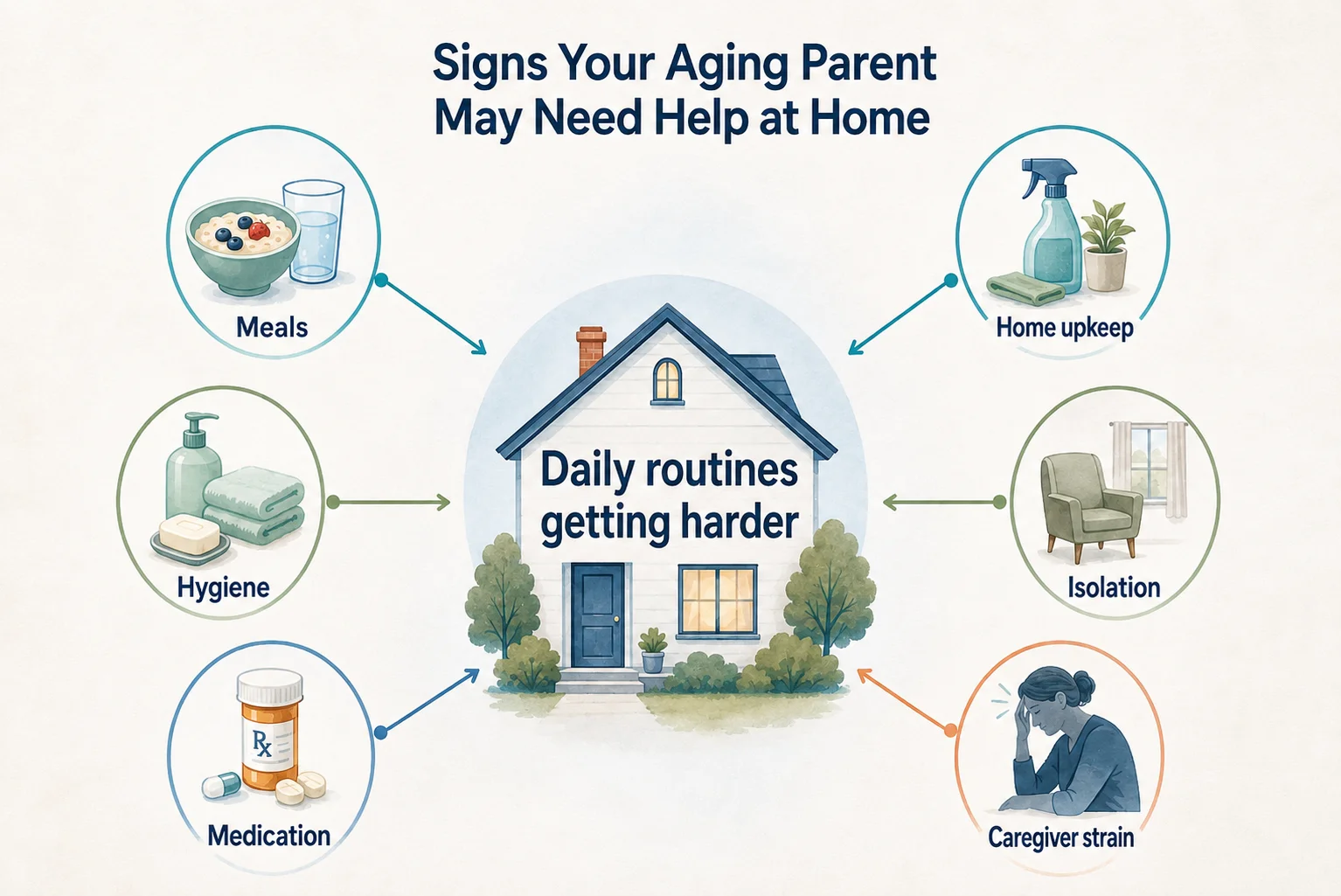
Sign 1: Meals Are Being Skipped or Becoming Less Consistent
Skipped meals can be one of the first practical signs that an aging parent needs help at home. Cooking, grocery planning, cleaning up, and remembering regular mealtimes can become tiring, especially when a person lives alone.
You may notice:
- Food left untouched in the refrigerator
- Fewer groceries than usual
- Expired food in cabinets
- Weight changes that should be discussed with a healthcare provider
- Less interest in cooking
- More reliance on snacks or easy foods
This does not mean your parent is unable to live at home. It may simply mean that meal routines have become harder to manage without support.
When eating well starts to feel like a daily challenge, meal preparation for seniors can be a practical way to support comfort, routine, and better mealtime consistency.
Sign 2: Bathing, Dressing, or Grooming Feels Harder
Changes in personal care may show that your parent needs help with daily living tasks. Bathing, dressing, grooming, and getting ready for the day can become more difficult because of fatigue, balance concerns, discomfort, or reduced confidence.
You may notice your parent wearing the same clothes repeatedly, avoiding bathing, skipping grooming routines, or seeming less comfortable with personal care tasks. These signs can be sensitive, so it helps to approach the conversation gently.
Instead of saying, “You need help,” try asking, “Would it make mornings easier if someone helped with a few daily routines?” This keeps the focus on comfort and dignity.
When everyday routines become harder to manage, our personalized home care services can help families explore support with bathing, daily living activities, companion care, meal preparation, medication reminders, and light housekeeping.
Sign 3: Medication Routines Are Becoming Confusing
Medication reminders can be helpful when a parent has trouble keeping track of timing or daily routines. Home care does not replace medical guidance, and medication questions should always be handled by the right healthcare professional. Still, reminders can support a more consistent daily routine.
You may notice:
- Missed doses
- Medication bottles in unusual places
- Confusion about timing
- Repeated questions about whether something was taken
- Difficulty following a routine set by a doctor or pharmacist
This can be stressful for families, especially when they cannot visit every day. A caregiver may help by offering reminders at the right time, based on the family’s instructions and care plan.
For families noticing missed doses or confusion around timing, healthy aging often starts with a simple reminder routine that helps seniors stay more consistent day to day.
Sign 4: The Home Is Becoming Harder to Keep Up With
A home that is harder to maintain may be a sign that daily tasks are becoming too much. Light housekeeping, dishes, laundry, and tidying up can take more energy than they used to.
You may notice piles of laundry, unopened mail, clutter in walkways, dishes left in the sink, or trash not being taken out regularly. These things can happen for many reasons. The important part is whether the pattern is new or becoming more frequent.
Light housekeeping support can help keep the home more comfortable. It can also make daily movement around the house easier by reducing clutter in common areas.
Not every family needs the same level of help, but small forms of support with meals, bathing, reminders, and housekeeping are simple ways home care can support safer daily routines.
Sign 5: Your Parent Is Spending More Time Alone
More time alone can be a sign that your parent may benefit from companion care. Some seniors slowly pull back from conversations, hobbies, errands, or regular contact with others.
You may notice fewer phone calls, less interest in visitors, or a change in mood when your parent spends long periods by themselves. This does not mean something is wrong. It may mean they could use more regular social support.
Companion care can include conversation, shared activities, help with simple routines, or being present during the day. For many families, this kind of support brings peace of mind because someone is checking in and offering company.
Sign 6: Family Caregivers Are Feeling Stretched
Home care may be needed when family support is no longer enough by itself. Adult children often help with meals, errands, appointments, cleaning, and check-ins while also managing work, children, and their own responsibilities.
It is common for families to feel unsure about asking for help. But needing support does not mean you are failing your parent. It means the care needs are growing, and the family may need a steadier plan.
You may be ready to consider home care if:
- You feel worried when your parent is alone
- You are missing work or personal responsibilities often
- Siblings or relatives disagree about who should help
- Your parent needs help more often than before
- You want support but do not know where to start
A care conversation can help you understand what kind of help may fit without making a rushed decision.

How to Talk With Your Parent About Home Care
The best conversation starts with respect, not pressure. Many aging parents worry that accepting help means losing independence. It helps to explain that home care is meant to support independence, not remove it.
You can start with simple, caring language:
- “I noticed meals have been harder lately. Would help with cooking make the day easier?”
- “Would it feel better to have someone help with light housekeeping once or twice a week?”
- “I want you to stay comfortable at home. Can we talk about what support would feel okay?”
Focus on the specific routine, not the person’s age. Instead of saying, “You are getting older,” talk about what is becoming harder: meals, bathing, reminders, housekeeping, or companionship.
How Home Care Can Help With Practical Daily Needs
Home care can help with everyday routines that allow a person to remain more comfortable at home. Support may include meal preparation, bathing assistance, medication reminders, companion care, help with activities of daily living, and light housekeeping.
At Best of Care Home Care, we focus on care that fits the person’s needs and preferences. Some families may need support with personal care. Others may need companionship, meals, or help keeping the home comfortable. The right plan depends on the person, the home routine, and the family’s goals.
We serve families in Philadelphia County, Delaware County, Montgomery County, Chester County, and Bucks County. If your loved one lives in one of these areas, our team can walk you through current scheduling, service availability, and next steps.
When Should You Consider Setting an Appointment?
You should consider setting an appointment when daily routines are becoming harder for your parent or more stressful for the family. You do not have to wait until everything feels urgent.
A good time to reach out is when:
- Your parent is skipping meals
- Bathing or grooming has become harder
- Medication reminders are needed
- The home is becoming difficult to maintain
- Your parent seems lonely or isolated
- Family caregivers need more support
- You are unsure what type of help would be appropriate
An appointment gives you space to talk through what is happening and what kind of care may fit. It also helps the family understand options before the situation becomes more stressful.
FAQ
What are common signs that an aging parent needs help at home?
Common signs include skipped meals, missed reminders, trouble with bathing or dressing, light housekeeping falling behind, more time spent alone, or family caregivers feeling overwhelmed. Look for patterns, not just one-time changes.
What daily tasks can home care help with?
Home care can help with meal preparation, bathing assistance, medication reminders, companion care, activities of daily living, and light housekeeping. The exact support depends on the person’s needs and current availability.
How soon should I set an appointment for home care?
You should set an appointment when you notice daily routines becoming harder or when family support is no longer enough. Starting early can help you explore options calmly and choose support that fits your loved one’s needs.
Conclusion
Recognizing that an aging parent may need help at home is not always easy. The signs often start small, such as missed meals, less consistent personal care, forgotten reminders, or a home that is harder to keep up with.
If your loved one is finding daily routines harder to manage, set an appointment today with Best of Care Home Care. We’ll listen, talk through their needs, and help you understand what kind of support may fit at home.
Leave a Reply